Tyres: how to calculate their real cost per kilometre
To calculate tyre cost per kilometre, add the expenses for the same set of tyres and divide that total by the distance actually driven on that set. A set costing €600 over 30,000 km costs €0.02/km, or €2 per 100 km. This measures recorded spending; it does not predict how long the next tyre will last.
In this guide
- Define what you are measuring first
- Which costs should you include?
- A worked example, not a lifespan promise
- For seasonal sets, add the right distances
- Do not confuse a quotation with a track record
- Maintenance matters even as cost per kilometre falls
- Keep the evidence in the vehicle file
- What to ask for at the next replacement
To calculate tyre cost per kilometre, add the expenses for the same set of tyres and divide that total by the distance actually driven on that set. A set costing €600 over 30,000 km costs €0.02/km, or €2 per 100 km. This measures recorded spending; it does not predict how long the next tyre will last.
The advertised price per tyre tells only part of the story. Fitting, seasonal changes and storage can alter the budget. Consistent records help you compare your own spending and prepare for your next garage visit, without making price the only consideration when choosing tyres.
Define what you are measuring first
Choose a scope: two tyres on one axle, four tyres replaced together, or one seasonal set. Keep that scope throughout the calculation. Comparing an invoice for two tyres with spending on four would be misleading, even if the arithmetic were correct.
Record the odometer when the set is fitted and when it is permanently removed. The difference is the distance covered only if that set stayed on the car throughout. If it is still in use, the result is provisional: cost per kilometre will change with further journeys and expenses.
Which costs should you include?
Include the tyres, fitting, balancing, valves and other invoiced services relating to that set. Add storage and seasonal swaps if you want the full budget. Separate the lines on a mixed invoice; an unrelated engine service should not become part of your tyre cost.
Use comparable amounts, such as prices including tax for a personal budget. Record any reimbursements and excluded expenses. Wheel alignment can be tracked separately: if you include it, explain your allocation rule and apply the same approach to later comparisons.
A worked example, not a lifespan promise
Fictional example: four tyres cost €480, fitting €80 and storage allocated to the set €40. Total: €600. Fitted at 45,000 km and removed at 75,000 km without alternating with another set, they covered 30,000 km. The calculation is therefore 600 ÷ 30,000 = €0.02/km.
Another set that actually cost €640 over 40,000 km would work out at €0.016/km, or €1.60 per 100 km. These figures illustrate the method, not a brand’s performance. Consider journeys, vehicle, operating conditions and included services before drawing conclusions.
For seasonal sets, add the right distances
With summer and winter tyres, the vehicle’s odometer also advances while the other set is in use. Record the date and mileage at every fitting and removal. Add up the distances from each period on the same set instead of subtracting two readings taken several years apart.
For example, periods of 8,000 km and 7,000 km give 15,000 km for the tracked set. Allocate swap and storage costs using an explicit rule, without counting them twice. If readings are missing, label the result as an estimate rather than displaying artificial precision.
Do not confuse a quotation with a track record
A quotation is proposed spending; a track record contains recorded spending and distances. Before buying, compare offers for the same number of tyres, a fitment suitable for the vehicle and the same services. Ask what is included in the final price.
Do not automatically divide a quote by an assumed lifespan to claim guaranteed savings. You can model several distances as budget scenarios, but label them as assumptions. Suitability for the vehicle and driving conditions comes before any financial comparison.
Maintenance matters even as cost per kilometre falls
Michelin recommends checking pressure monthly, with cold tyresOpens external site. Follow the setting specified for your vehicle and load. A cost calculation does not replace an inspection.
Tyre lifespan varies with use and maintenanceOpens external site. Uneven wear calls for professional assessment. Never wait for a “cost-effective” mileage before having a damaged or questionable tyre examined.
Keep the evidence in the vehicle file
Keep the itemised invoice, tyre model and size, fitting date and mileage, and subsequent work. A clear file shows what was fitted, on which axle and when. A purchase invoice alone does not establish the tyres’ current condition.
The CodeNekt features bring together maintenance, documents and vehicle history. These records provide a basis for tracking; the calculation explained here can be done in a spreadsheet. When preparing a sale, also see how to check a used car’s service history.
What to ask for at the next replacement
Before leaving the garage, check that the invoice identifies the set fitted and the work carried out. Note the odometer, link the document to the right vehicle and keep any storage charges itemised. If only two tyres change, start a separate record instead of resetting the record for all four.
The aim is to understand spending and plan ahead. Keep the same scope at each intervention, separate observations from estimates and use the history to ask better questions at the garage. Safety is the starting condition, never a variable to adjust in the budget.
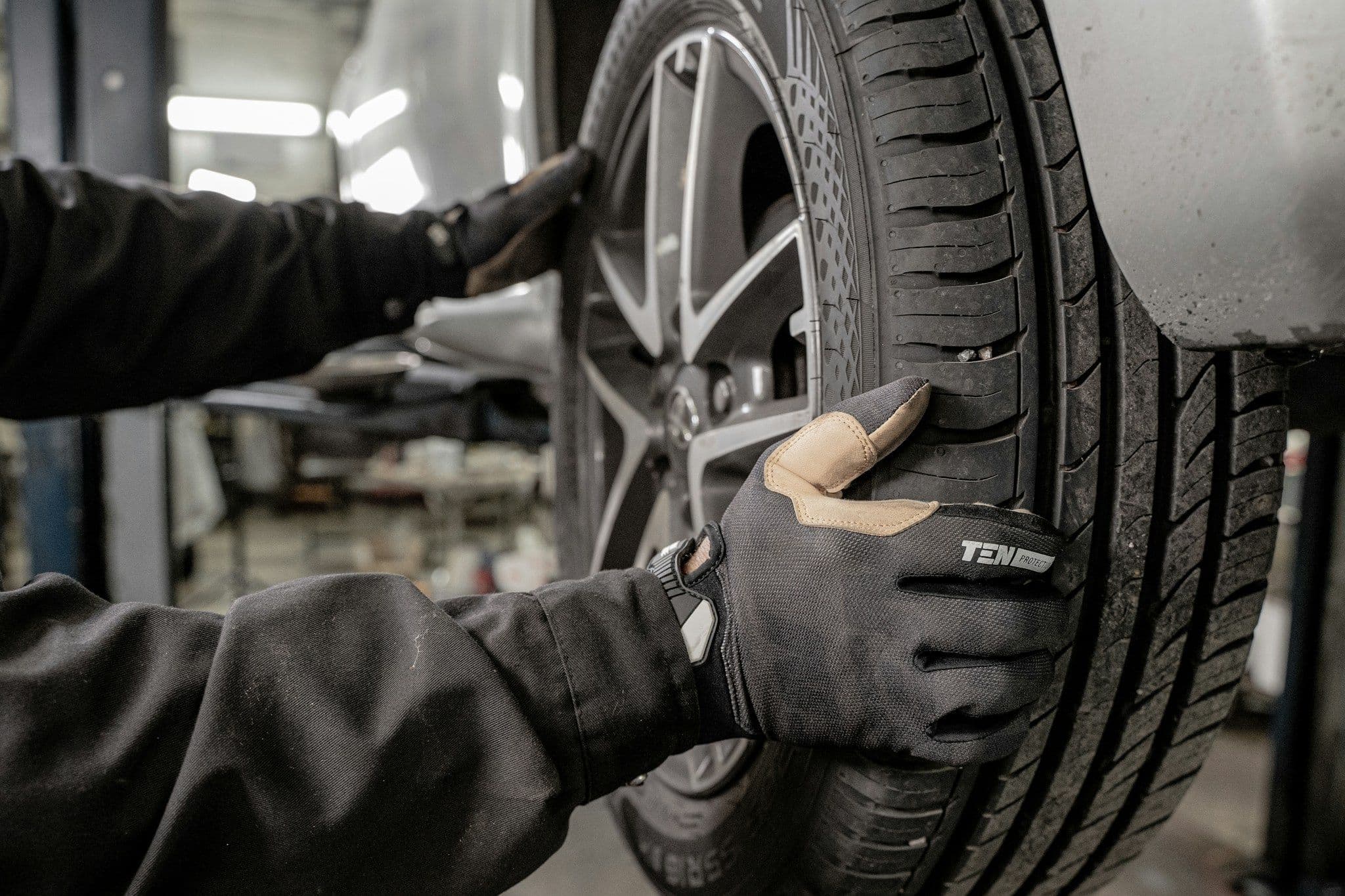
Photo: Jimmy Nilsson Masth / UnsplashOpens external site, used under the Unsplash licenceOpens external site. Technical sources checked on 2 November 2026; calculation examples are fictional.
CodeNekt App
Keep vehicle information organized.
Centralize vehicle documents, reminders and history from your phone.
Download the appRelated articles
Keep reading